

Illustration showing a laptop, gaming controller, and headset connected by wireless signals, with a security lock icon above, representing DAVE end-to-end encryption across Discord.
Product & Features

Every Voice and Video Call on Discord Is Now End-to-End Encrypted

In August 2023, we shared that we were experimenting with end-to-end encryption (E2EE) for voice and video on Discord. That post was short and deliberately understated. But it represented a real commitment, one we knew would take years to deliver on.

It's been quite a journey since then. In September 2024, Stephen Birarda introduced the DAVE protocol: an open, audited end-to-end encryption protocol for audio and video. We began migrating calls on desktop and mobile and started proving that E2EE could operate at Discord's scale without compromising the experience people expect from us. In 2025, Clément Brisset extended DAVE to every remaining platform, including web browsers, gaming consoles, support for Discord bots/apps, and our Social SDK, helping close the gaps that had kept some calls from being fully encrypted. And at the beginning of March 2026, we completed that migration. 

End-to-end Encryption is now standard for every voice and video call on Discord, outside of stage channels. No opt-in required.

I'm proud of what our team has accomplished, and I want to talk about what it took and why it matters.

Doing this right

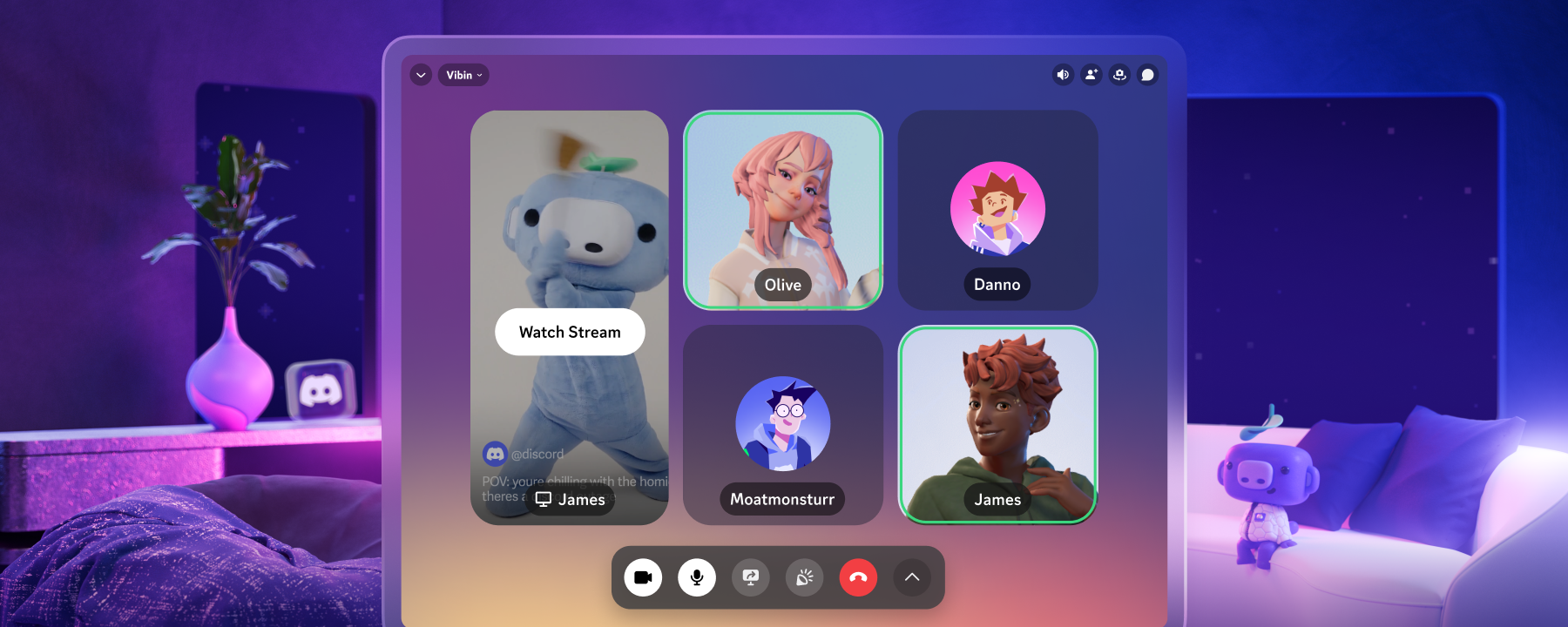
The thing that makes Discord's voice and video infrastructure unusual isn't just scale — it's diversity. A single Discord call can have someone on a laptop, someone on their phone, someone on a PlayStation, someone on an Xbox, and someone in a web browser, all in the same conversation at the same time. Every one of those participants expects Discord’s high-quality, low-latency communications, regardless of what device they're on. Building an E2EE protocol that works seamlessly across all of those surfaces simultaneously is, to my knowledge, unlike anything else that's been shipped. DAVE is likely one of the internet’s most platform-diverse E2EE voice and video implementations.

We set a standard for ourselves early on that went beyond just getting encryption working. The DAVE protocol is open, and the implementation is open-source. We had the design and implementation externally audited by Trail of Bits, and we expanded our bug bounty program to cover the protocol. We didn't want to just ship encryption — we wanted to build something the broader community could inspect, validate, and hold us accountable for.

That commitment shaped how the team worked at every step. For example, when we brought DAVE to web browsers, we discovered an issue upstream in Firefox that prevented the protocol from functioning correctly in real-world calls. We could have shipped a workaround or deprioritized Firefox support. Instead, the team worked directly with Mozilla and got hands-on with the Firefox codebase, identified the root cause, and helped get a patch merged. Mozilla was a great partner in that process. It's a small example, but it captures something about how we approached this entire effort: doing it right meant going wherever the work needed to go, even when that extended well beyond our own codebase.

Through this entire process, as we brought each platform on board, we had to continually navigate performance and compatibility challenges without disruption. The transition to encrypted calls was seamless for the vast majority of users.

Reaching 100%

As of early March 2026, every voice and video call on Discord, whether in DMs, group DMs, voice channels, or Go Live streams, is end-to-end encrypted by default. To complete that migration, we required all clients to support DAVE before joining a call. We are now in the process of removing the client code that supports unencrypted fallback. After that is done, it will not be possible to fall back to unencrypted connections.

And importantly, we hit the quality bar we set for ourselves at the outset. Call quality and performance remain at the level our users expect. E2EE happens transparently. The experience hasn't changed, the protection has.

Stage channels are the one exception. Those are designed for broadcasting to larger audiences, such as live events, AMAs, or community town halls. The architecture reflects that: E2EE helps protect personal conversations, and Stage channels aren't designed for that.

What's next

This milestone matters, but it's not the end of the work. We're continuing to invest in DAVE and the open protocol. Our bug bounty program remains active.

We know the next question might be: what about text? We have no current plans to extend E2EE to text messages. Many of the features people use on Discord were built on the assumption that text isn't end-to-end encrypted, and rebuilding them to work with encryption is a meaningful engineering challenge. 

We will continue to strengthen privacy protections for the people who use Discord. This work is ongoing, not a one-time project.

I want to close by thanking the team that built this. DAVE was a multi-year effort that required patience, genuine craft, and a willingness to hold the bar, even when it would have been easier to ship something faster or cut scope. Stephen and Clément, the lead engineers behind this work, truly went above and beyond throughout. What we ended up with is an open, externally validated protocol running across every platform Discord supports. I'm proud of what we've built — and of being able to bring real, verifiable, structural privacy protections to personal audio and video conversations for all of Discord's users.

If you want to dig deeper into the technical work, the prior posts and open-source repositories are linked throughout this post. And if you have questions or feedback, please reach out.

Tags
No items found.

related articles